A variable-paycheck method
Plan the bills without pretending every check is the same.
An irregular paycheck budget needs two anchors: what actually arrived and what is due before money arrives again.
This method keeps actual deposits, estimated income, bill amounts, and planned assignments visibly separate. It cannot make a short check fit every obligation, but it can show the timing gap early and keep hoped-for income out of the available-cash column.
One-page PDF · no email gate · planning aid only
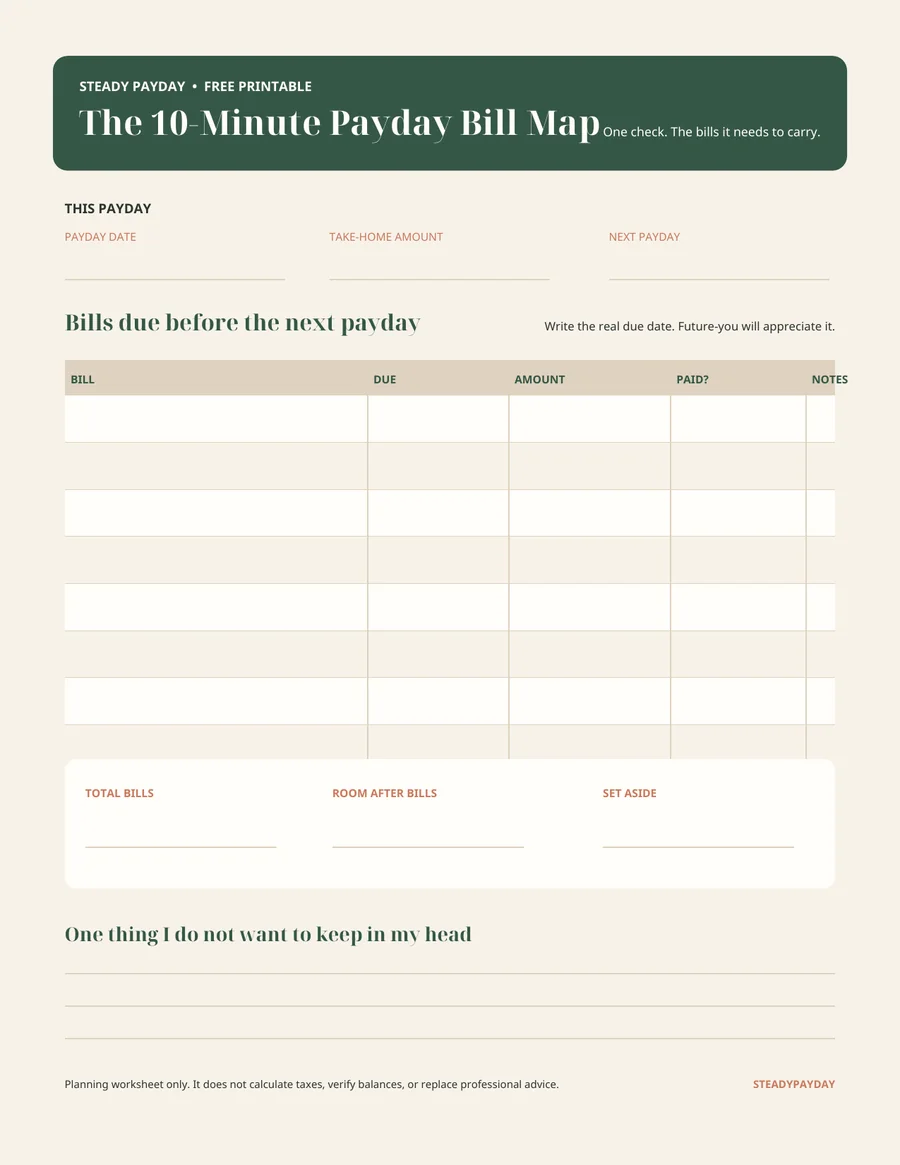
Change the planning unit
Plan one deposit window, not an imaginary average month.
A monthly average can describe the past, but it does not tell you what is available today. For the current plan, use the take-home deposit that actually cleared. Then define its job by the real due dates between now and the next payday.
Keep in the actual column
The deposited take-home amount and current bill amounts confirmed by paystubs, accounts, or statements.
Keep visibly estimated
Upcoming hours, shift premiums, tips, commissions, bill projections, and any paycheck that has not arrived.
The distinction matters because expected gross pay is not spendable cash. Payroll deductions, taxes, schedule changes, and employer rules can all change what reaches the account.
The five-step reset
Start after the deposit clears.
-
Write what actually arrived.
Copy the take-home deposit from the account or paystub. Keep gross earnings and an unconfirmed future check out of this number. If part of the deposit is already committed or unavailable, record that separately rather than silently treating the full amount as free to assign.
-
Mark the next expected payday.
This creates the current planning window. If the date itself can move, label it expected and use the employer or payer's current information as the authority. The worksheet is not a guarantee that payment will arrive on schedule.
-
Copy every due date inside that window.
Use current bills or account records. Include non-monthly obligations that fall before the next deposit and allow for payment-processing time. Do not move a contractual due date on paper unless the biller has actually approved the change.
-
Label the status of every number.
Use four plain labels: actual for confirmed records, estimated for unconfirmed amounts, planned for intended assignments, and paid only after the payment is confirmed. A plan becomes easier to audit when those states do not blur together.
-
Carry the handoff forward.
When the next check arrives, replace its estimate with the actual deposit, confirm what was paid, and map the next due-date window. Keep one future payday visible so the end of a calendar month does not hide an early next-month bill.
A fictional variable-pay example
The current check and the next check have different evidence.
Suppose $1,460 cleared on Friday the 7th. The next check is expected on Friday the 21st, but its amount is still unknown because the scheduled hours can change.
Current payday · actual
- Deposit received$1,460 actual
- Phone · due 11th$74 statement
- Insurance · due 16th$138 statement
Next payday · expected
- Deposit dateFriday the 21st · expected
- Deposit amountNot yet known
- Power · due 24th$96 current bill
The example demonstrates labels and timing only. It does not prescribe which bill to pay, assume the remaining money is disposable, or promise that the next deposit will cover the next window.
When the check is short
Use the worksheet to identify the gap—not to hide it.
If confirmed obligations in the window exceed the actual amount available, leave the gap visible. The worksheet cannot decide legal priority, alter a contract, waive a fee, or tell you whether a provider will change a due date.
- Confirm each balance and due date with the provider's current record.
- Check the provider's official options before assuming a date, minimum, or payment plan can change.
- Keep any unconfirmed arrangement labeled as pending until the provider confirms it.
- For broader financial-education tools, consult the Consumer Financial Protection Bureau's Your Money, Your Goals resources.
Quick answers
Irregular-paycheck planning FAQ
Should I budget from my lowest paycheck?
A low historical check can be a cautious scenario, but it is still not today's available amount. For the current window, start with the actual cleared deposit. Keep low, expected, and actual figures labeled separately.
Can I average my last three or six checks?
An average can help describe past income, but it may hide the range between checks. Do not enter the average as if it already arrived. Keep the individual deposits available for context and use the current actual deposit for current assignments.
What if my payday date also changes?
Mark the best current date as expected, verify it through the payer's authoritative information, and avoid assigning an unreceived check as available cash. A longer visible due-date window can help expose the timing risk.
Does this method calculate taxes or payroll?
No. It organizes figures you enter. It does not calculate deductions, interpret employer rules, verify balances, or replace a paystub or professional advice.
Use the amount of structure you need